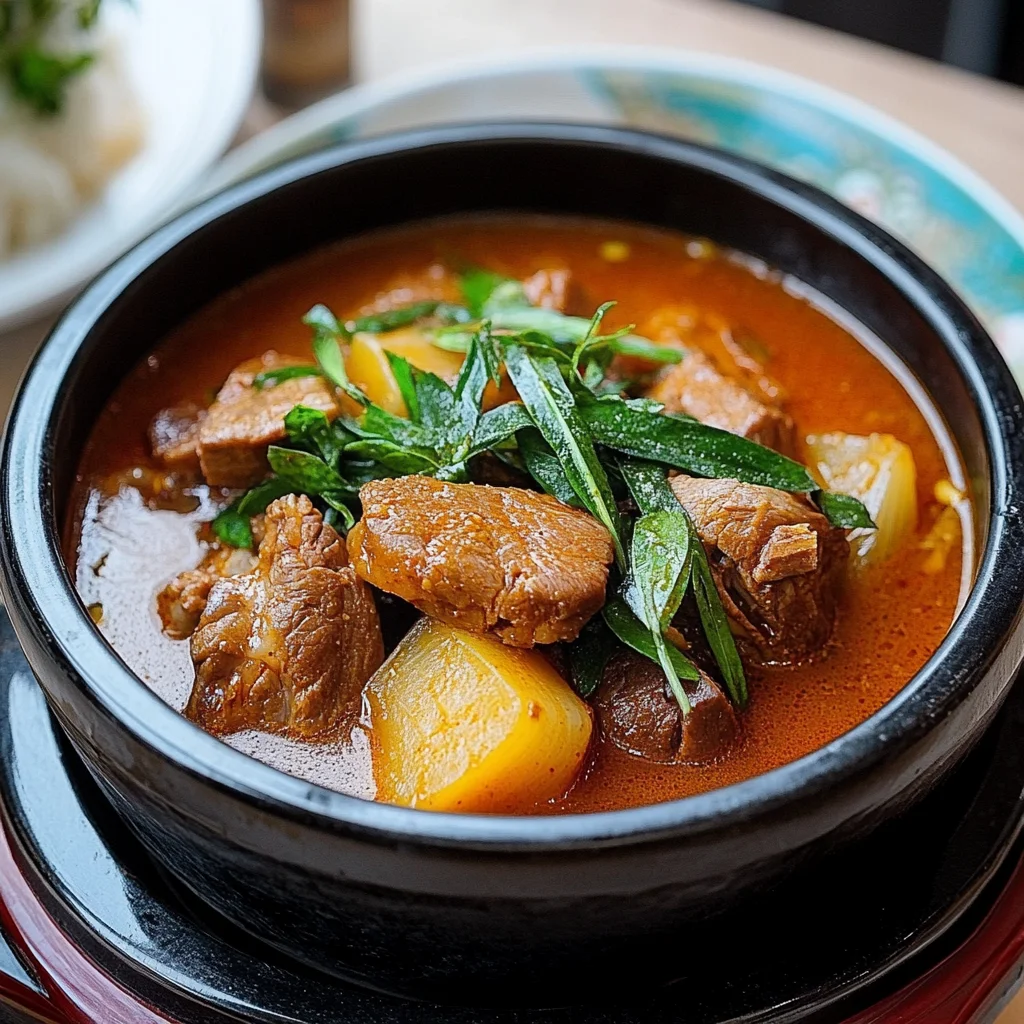
Gamjatang (beef Bone Soup) is a delightful Korean dish that brings comfort and flavor to any meal. This spicy soup is perfect for gatherings, family dinners, or simply when you crave something hearty. The combination of tender beef bones, aromatic spices, and nutritious vegetables creates a unique experience. Plus, it’s packed with flavor that truly represents Korean cuisine.
Why You’ll Love This Recipe
- Rich and Flavorful: The combination of beef neck bones and spices creates a robust taste that warms the soul.
- Nutrient-Rich: Gamjatang is loaded with healthy ingredients like potatoes and greens, making it both delicious and nutritious.
- Customizable: You can adjust the spice level by adding more or fewer peppers according to your preference.
- Perfect for Sharing: This recipe serves two but can easily be doubled for larger gatherings or meal prep.
- Time-Tested Tradition: Enjoy a taste of authentic Korean culture right in your home kitchen.
Tools and Preparation
Before diving into this delicious Gamjatang recipe, make sure you have the right tools on hand for a smooth cooking process.
Essential Tools and Equipment
- Large pot
- Cutting board
- Knife
- Mixing bowl
- Ladle
Importance of Each Tool
- Large pot: Essential for simmering the beef bones and other ingredients to develop rich flavors.
- Cutting board: Provides a safe surface for chopping vegetables and prepping ingredients efficiently.
Ingredients
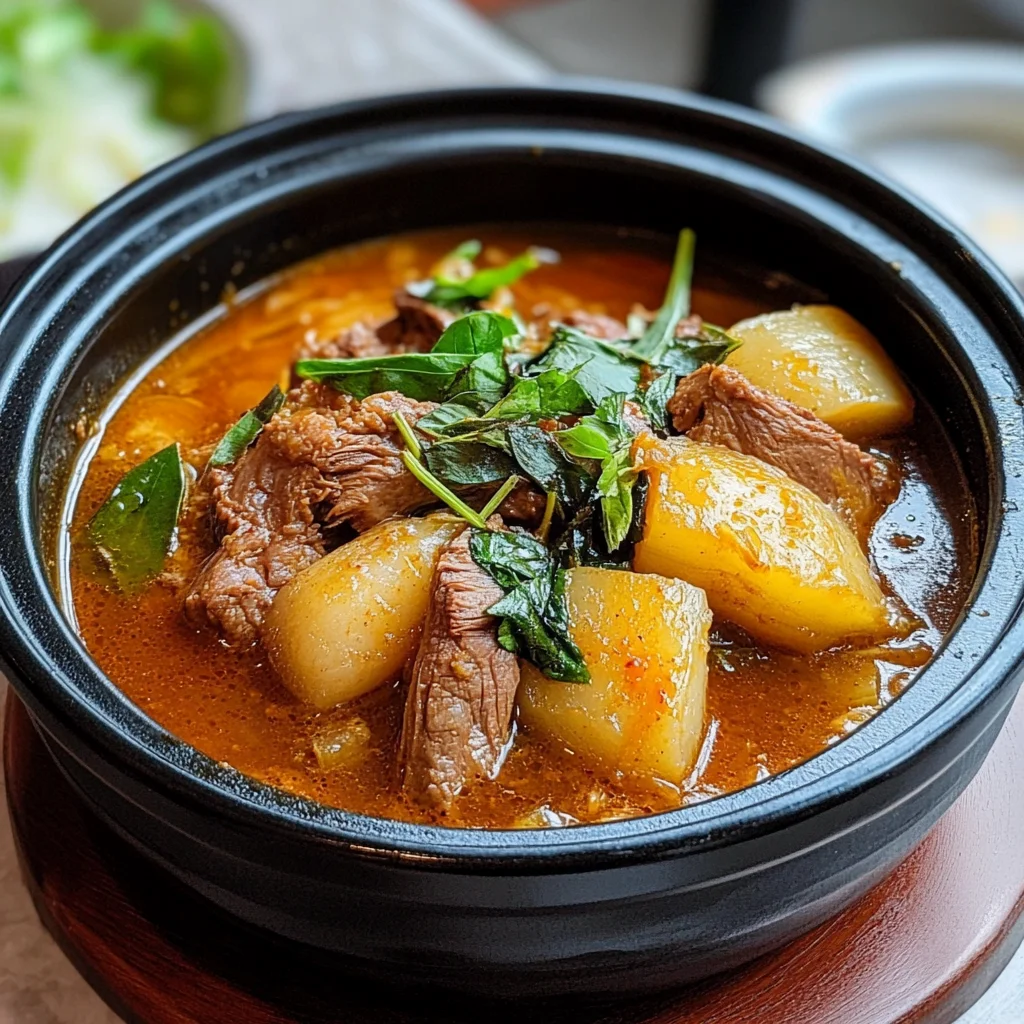
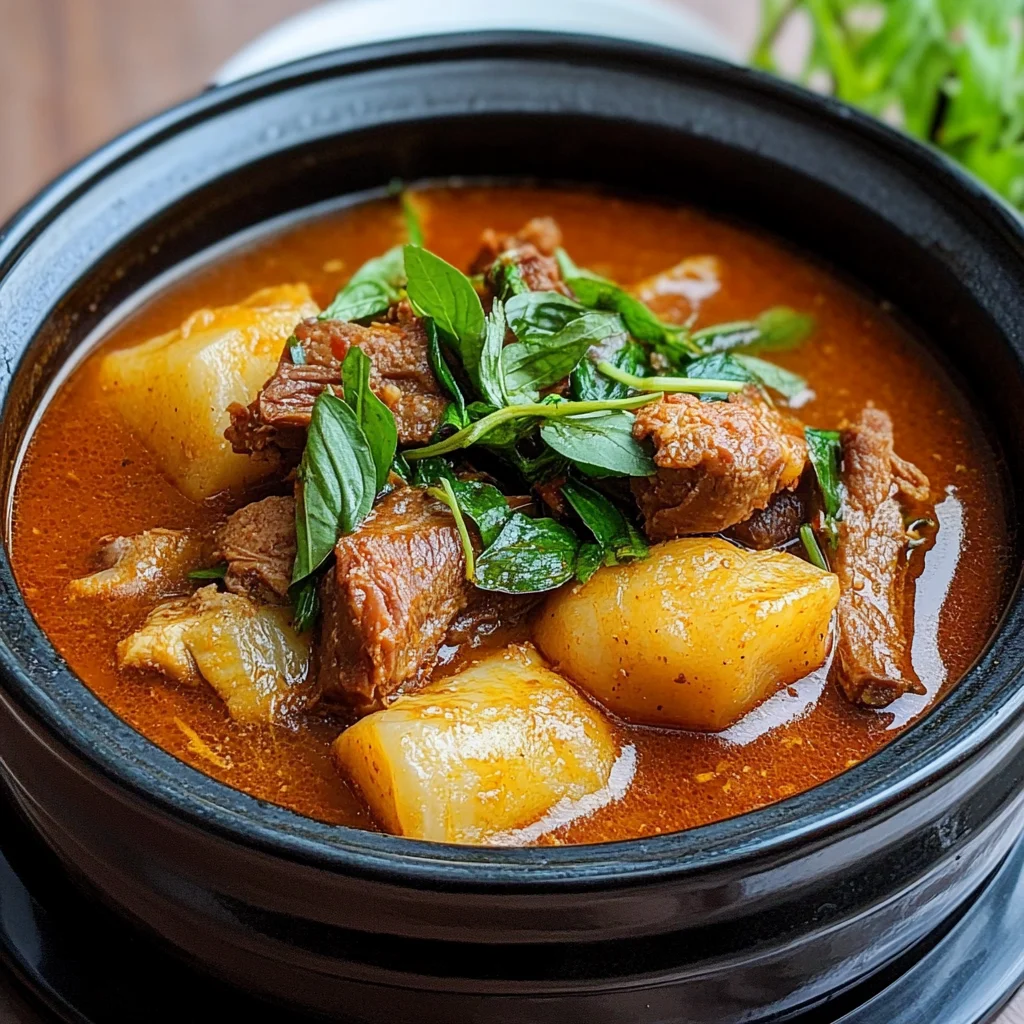
Gamjatang is a spicy soup made with tender & savory beef bones, potatoes, spices, and perilla leaves.
For the Soup
- 2 lbs beef neck bones
- 8-10 cups water
- 2 tbsp doenjang (fermented soybean paste)
- 1 oz sliced ginger (or 3 bay leaves)
- 1 small onion
- 1 dried shiitake mushroom
- 1 daepa (large green onion) (or 2 green onions)
- 10 perilla leaves
- 1 large russet potato (peeled & cut into 6 pieces)
- 1/2 lb young radish greens (or napa cabbage)
- 1 serrano pepper (or Korean spicy pepper if you can find it)
- 4 garlic cloves (minced)
- 2 tbsp gochugaru (Korean red pepper flakes)
- 1 tbsp gochujang (Korean red pepper paste)
- 2 tbsp fish sauce
- 3 tbsp perilla powder
- 1/2 tsp black pepper
- 1 tbsp plum syrup
- 1 tbsp Knorr chicken bouillon
- 2 tbsp water

How to Make Gamjatang (beef Bone Soup)
Step 1: Soak the Beef Neck Bones
Soak the beef neck bones in cold water for an hour, changing the water once or twice during this time. This step helps remove impurities.
Step 2: Prepare the Ingredients
While soaking, prepare the minced garlic, chopped green onion, sliced ginger, sliced onion, and washed young radish stems. Remember to keep peeled potatoes in cold water to prevent browning.
Step 3: Make the Seasoning Paste
Combine minced garlic, gochujang, gochugaru, fish sauce, perilla powder, black pepper, plum syrup, water, and Knorr chicken bouillon in a mixing bowl. Set aside.
Step 4: Blanch the Beef Neck Bones
After soaking them for an hour, drain and add the beef neck bones to a pot filled with room temperature water. Bring it to a boil over medium heat for about 10-15 minutes. Boil only briefly to eliminate gaminess.
Step 5: Clean the Bones
Drain the beef neck bones again and rinse them thoroughly under cold water. Ensure all impurities are removed from inside crevices.
Step 6: Start Cooking the Soup Base
Return beef bones to a cleaned pot. Add 8 cups of water along with ginger, onion, dried shiitake mushroom, and fermented soybean paste. Bring this mixture to a boil while skimming off any impurities that float to the top. Reduce heat to medium and cover for 90 minutes.
Step 7: Blanch Young Radish Greens
In another pot, bring some water to boil then blanch young radish greens for about 1-2 minutes before setting them aside.
Step 8: Finalize Broth Ingredients
After cooking for 90 minutes, discard the ginger and slice up the shiitake mushroom. Add one or two cups of water back into your soup pot along with your prepared seasoning paste. Mix well before adding potatoes, green onion, blanched radish greens, sliced shiitake mushrooms, and sliced serrano pepper.
Step 9: Simmer Until Tender
Cover your pot and let it cook for another 30 minutes until potatoes are chopstick tender.
Step 10: Add Perilla Leaves
Finally, add sliced perilla leaves last into the pot just before serving. Your delicious Gamjatang is now ready! Enjoy this hearty beef bone soup warm!
How to Serve Gamjatang (beef Bone Soup)
Gamjatang is best enjoyed hot and fresh, allowing the flavors to shine through. Pair it with a few sides for an authentic Korean dining experience.
With Steamed Rice
- Steamed rice complements the spiciness of gamjatang and helps balance the flavors.
With Kimchi
- A side of kimchi adds a tangy crunch that enhances the overall meal experience.
With Pickled Vegetables
- Pickled radish or cucumbers provide a refreshing contrast to the rich broth.
As a Late-Night Snack
- Enjoy gamjatang as a comforting late-night snack, especially after a long day.
Garnished with Green Onions
- Top your bowl with chopped green onions for added freshness and color.
With Soju or Beer
- Pair gamjatang with soju or beer for an authentic Korean meal that elevates the flavors.
How to Perfect Gamjatang (beef Bone Soup)
To achieve the perfect gamjatang, consider these helpful tips that enhance both flavor and texture.
- Use Fresh Ingredients: Fresh produce will elevate the taste of your soup, ensuring vibrant flavors.
- Don’t Rush the Cooking Time: Allowing enough time for simmering will make the beef tender and infuse deeper flavors into the broth.
- Adjust Spice Levels: Feel free to modify the amount of gochugaru or serrano pepper based on your preference for heat.
- Skim the Broth Frequently: Regularly skimming off impurities will result in a clearer and cleaner-tasting soup.
- Let It Rest: Allowing gamjatang to sit for a few minutes after cooking helps meld all the flavors together beautifully.
Best Side Dishes for Gamjatang (beef Bone Soup)
To round out your meal, consider adding some traditional side dishes that complement gamjatang perfectly.
- Kimchi Jjigae: A spicy kimchi stew that adds depth and richness to your meal.
- Banchan: Various small side dishes like seasoned spinach, bean sprouts, or radish salad provide variety.
- Japchae: Sweet potato noodles stir-fried with vegetables make for a delightful textural contrast.
- Korean Fried Chicken: Crispy fried chicken seasoned with spices pairs wonderfully with the broth.
- Sigeumchi Namul: Seasoned spinach is light and refreshing, balancing out the heavy soup.
- Steamed Egg Custard (Gyeran-jjim): This fluffy side dish adds creaminess and is easy to prepare alongside gamjatang.
Common Mistakes to Avoid
When making gamjatang, it’s important to avoid common pitfalls that can affect the flavor and texture of your dish.
- Skipping the soaking step: Not soaking the beef neck bones can lead to a gamier taste. Soak them in cold water for at least an hour to remove impurities.
- Neglecting to skim impurities: Failing to skim off impurities while boiling may result in a cloudy soup. Remember to regularly check the surface during the first boil and remove any floating bits.
- Not mixing the soybean paste properly: Adding doenjang without mixing it with water can cause clumps. Always dissolve it in half a cup of water before adding it to the pot.
- Overcooking vegetables: Cooking potatoes and greens for too long can make them mushy. Ensure you add them at the right time, so they retain their texture and flavor.
- Ignoring seasoning adjustments: Each ingredient’s freshness can vary, affecting flavor. Taste as you go and adjust seasonings like gochugaru or fish sauce based on your preference.
Refrigerator Storage
- Store gamjatang in an airtight container.
- It can last for up to 3-4 days in the refrigerator.
- Allow it to cool completely before sealing it for storage.
Freezing Gamjatang (beef Bone Soup)
- Use freezer-safe containers or heavy-duty freezer bags.
- Gamjatang can be frozen for up to 3 months.
- Leave some space in containers for expansion when freezing.
Reheating Gamjatang (beef Bone Soup)
- Oven: Preheat oven to 350°F (175°C) and place in an oven-safe dish covered with foil. Heat until warm throughout.
- Microwave: Transfer into a microwave-safe bowl and cover loosely. Heat on medium power until hot, stirring occasionally.
- Stovetop: Pour gamjatang into a pot over medium heat, stirring occasionally until heated through.
Frequently Asked Questions
What is gamjatang (beef bone soup)?
Gamjatang is a traditional Korean soup made with beef neck bones, spices, potatoes, and perilla leaves. It’s known for its rich flavor and spicy kick.
Can I use different vegetables in gamjatang?
Yes! While potatoes and radish greens are traditional, you can customize your gamjatang by using other vegetables like carrots or napa cabbage based on your preference.
How spicy is gamjatang?
The spiciness of gamjatang largely depends on how much gochugaru (Korean red pepper flakes) you add. You can adjust this ingredient according to your spice tolerance.
Can I make gamjatang ahead of time?
Absolutely! Gamjatang tastes even better when made ahead as the flavors meld together over time. Just follow proper storage instructions to keep it fresh.
Final Thoughts
Gamjatang is not just a comforting dish; it’s also versatile and packed with flavor. Whether enjoyed alone or shared with loved ones, this beef bone soup brings warmth on chilly days. Feel free to customize it with your favorite vegetables or adjust the spice level to suit your taste! Try making this delicious recipe today!
Gamjatang (Beef Bone Soup)
- Total Time: 2 hours 30 minutes
- Yield: Serves approximately four people 1x
Description
Gamjatang, or Korean Beef Bone Soup, is a heartwarming dish that infuses your kitchen with the rich and aromatic flavors of Korean cuisine. This spicy and savory soup features tender beef neck bones simmered to perfection, complemented by nutritious vegetables like potatoes and perilla leaves. Whether for family gatherings or a cozy dinner, Gamjatang offers a satisfying experience that warms both the body and soul. Customize the spice level to your preference for an added kick, making it the perfect comfort food for any occasion.
Ingredients
- 2 lbs beef neck bones
- 8–10 cups water
- 2 tbsp doenjang (fermented soybean paste)
- 1 oz sliced ginger (or 3 bay leaves)
- 1 small onion
- 10 perilla leaves
- 1 large russet potato (peeled & cut)
- 4 garlic cloves (minced)
- 2 tbsp gochugaru (Korean red pepper flakes)
- 1 tbsp gochujang (Korean red pepper paste)
Instructions
- Soak beef neck bones in cold water for an hour; change water once or twice.
- Prepare all vegetables: mince garlic, chop green onions, slice ginger and onion.
- Make seasoning paste by mixing minced garlic, gochujang, gochugaru, fish sauce, black pepper, plum syrup, and water in a bowl.
- Blanch beef neck bones briefly in boiling water; drain and rinse to remove impurities.
- In a cleaned pot, combine beef bones with water, ginger, onion, shiitake mushroom, and doenjang; boil and skim impurities for 90 minutes.
- Blanch young radish greens for 1-2 minutes and set aside.
- After simmering broth, add seasoning paste followed by potatoes, green onions, blanched radish greens, and sliced peppers; cook until potatoes are tender.
- Add sliced perilla leaves just before serving.
- Prep Time: 30 minutes
- Cook Time: 120 minutes
- Category: Main
- Method: Simmering
- Cuisine: Korean
Nutrition
- Serving Size: 1 serving
- Calories: 290
- Sugar: 4g
- Sodium: 880mg
- Fat: 15g
- Saturated Fat: 6g
- Unsaturated Fat: 8g
- Trans Fat: 0g
- Carbohydrates: 25g
- Fiber: 3g
- Protein: 20g
- Cholesterol: 70mg
Keywords: Use fresh ingredients for optimal flavor enhancement. Adjust spice levels by varying gochugaru quantity or using different peppers. Skim the broth regularly during cooking for a clearer soup.