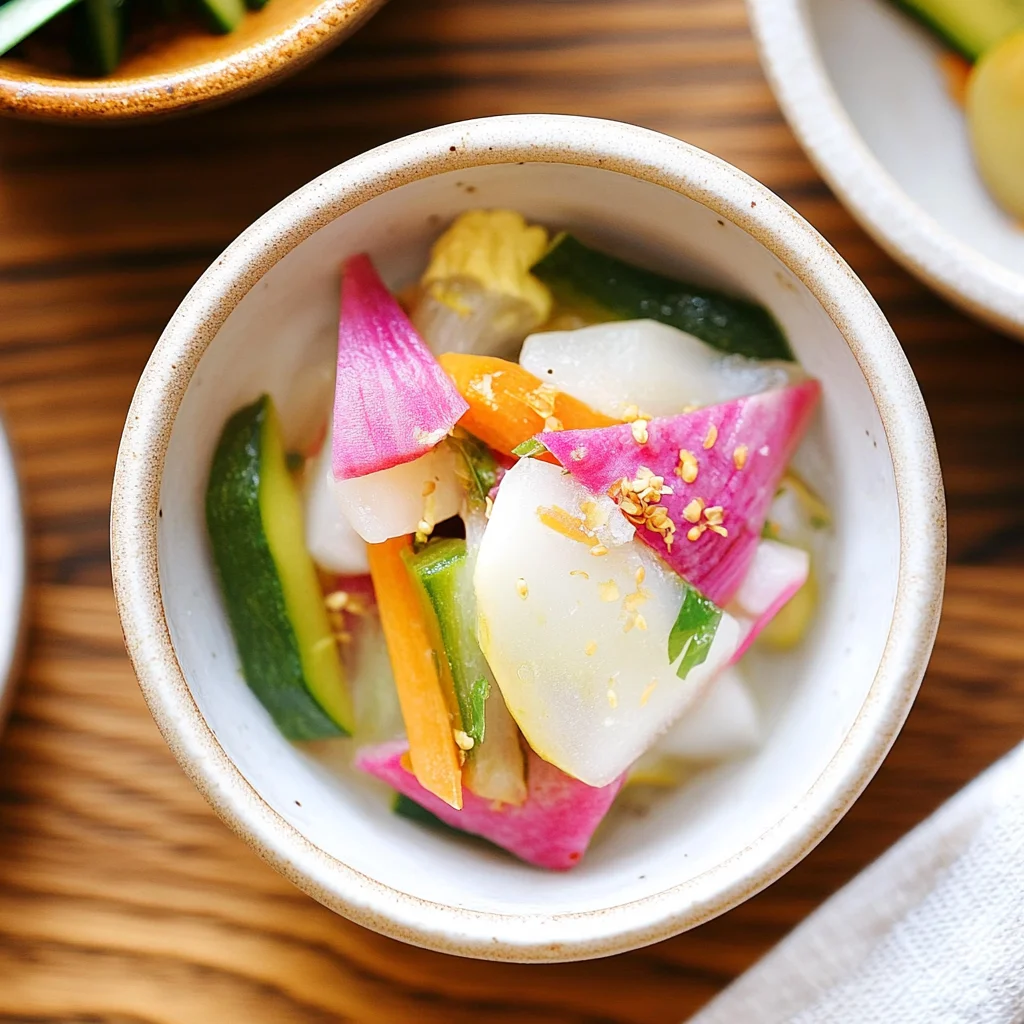
Colorful and crunchy vegetables are the star ingredients for my quick, simple Asazuke: Everyday Japanese Pickles recipe. These Japanese lightly pickled vegetables are ready in just one hour! Perfect for any occasion, Asazuke adds a fresh and tangy crunch to meals, making it an ideal side dish or snack. The unique blend of flavors from the pickling process enhances the natural taste of the vegetables while introducing a delightful umami twist.
Why You’ll Love This Recipe
- Quick Preparation: This Asazuke recipe takes only 15 minutes of prep time, with a minimum pickling duration of just 1 hour.
- Flavorful Variety: The combination of colorful veggies creates an exciting mix of textures and flavors that elevate any meal.
- Versatile Use: Enjoy Asazuke as a side dish, a topping for rice bowls, or even as a tasty snack on its own.
- Health Benefits: Packed with vitamins and low in calories, these lightly pickled vegetables are a nutritious addition to your diet.
- Customizable Ingredients: You can easily swap in your favorite vegetables or add unique flavors like yuzu zest or shiso leaves.
Tools and Preparation
Gathering the right tools makes the preparation seamless. Having everything ready will ensure you can enjoy making this delicious Asazuke without any hassle.
Essential Tools and Equipment
- Digital kitchen scale
- Large mixing bowl
- Sharp knife
- Cutting board
- Measuring spoons
Importance of Each Tool
- Digital kitchen scale: Ensures precise measurements for consistent results every time you make Asazuke.
- Large mixing bowl: Provides ample space for mixing ingredients without spilling.
- Sharp knife: Aids in easily cutting vegetables into uniform sizes for even pickling.
Ingredients
Colorful and crunchy vegetables are the star ingredients for my quick, simple Asazuke: Everyday Japanese Pickles recipe. These Japanese lightly pickled vegetables are ready in just one hour! Take them to the next level by adding shiso leaves, yuzu zest, and sesame oil.
For the Vegetables
- 4 leaves napa cabbage (11 oz, 300 g; or use green cabbage)
- 2 inches daikon radish (6 oz, 170 g; or use turnips or cauliflower)
- 1 Japanese or Persian cucumber (4.5 oz, 128 g)
- ½ watermelon radish (3.5 oz, 100 g; or use red radish)
- ⅓ carrot (1.6 oz, 45 g)
For the Pickling Mixture
- Diamond Crystal kosher salt
- ½ tsp sugar
- 1 piece kombu (dried kelp) (1 x 2 inches or 2.5 x 5 cm per piece)
For Garnish
- 5 shiso leaves (perilla/ooba) (optional but recommended)
- Toasted sesame oil (for drizzling)
- Toasted white sesame seeds (for sprinkling)
- Yuzu zest (optional)

How to Make Asazuke (Japanese Lightly Pickled Vegetables)
Step 1: Prepare Your Ingredients
Gather all your ingredients before starting. Ensure that your digital kitchen scale is set up to measure accurately.
Step 2: Weigh Your Bowl
Take note of how much your empty large bowl weighs using the scale. This will help you measure the weight of the vegetables correctly.
Step 3: Chop Vegetables
Using a sharp knife, chop all vegetables into bite-sized pieces. Aim for uniform sizes to ensure even pickling.
Step 4: Combine Ingredients
In your large mixing bowl, combine all chopped vegetables with kosher salt and sugar. Mix thoroughly until coated.
Step 5: Add Kombu
Add the piece of kombu to the vegetable mixture for added flavor. This seaweed will infuse an umami taste during the pickling process.
Step 6: Allow to Pickle
Cover your bowl with plastic wrap and let it sit at room temperature for at least one hour or overnight in the fridge for deeper flavor.
Enjoy your homemade Asazuke as a refreshing side dish!
How to Serve Asazuke (Japanese Lightly Pickled Vegetables)
Asazuke, the delightful Japanese lightly pickled vegetables, can be served in various ways. These colorful and crunchy treats not only enhance your meals but also add a refreshing twist. Here are some serving suggestions that will elevate your dining experience.
As a Standalone Snack
- Enjoy Asazuke on its own as a light snack. The crisp texture and tangy flavor make it perfect for midday cravings.
Accompanying Rice Dishes
- Serve Asazuke alongside steamed rice or sushi. The pickles complement the blandness of rice, adding excitement to every bite.
In Salads
- Toss Asazuke into salads for an added crunch. They pair wonderfully with greens, providing a burst of flavor and color.
With Grilled Meats
- Pair Asazuke with grilled meats like teriyaki chicken or beef. The acidity of the pickles balances the richness of the meat.
In Sandwiches or Wraps
- Add Asazuke to sandwiches or wraps for an unexpected crunch. They work well with various fillings, enhancing both taste and texture.
On Charcuterie Boards
- Include Asazuke on charcuterie boards as a vibrant contrast to cheeses and cured meats. They serve as an eye-catching garnish and palate cleanser.
How to Perfect Asazuke (Japanese Lightly Pickled Vegetables)
To achieve the best flavor and texture in your Asazuke, follow these helpful tips for perfecting this Japanese lightly pickled vegetables recipe.
- Choose Fresh Vegetables: Use fresh, high-quality vegetables for the best taste and crunch. This will enhance the overall quality of your pickles.
- Salt Properly: Make sure to use Diamond Crystal kosher salt as recommended. It helps draw out moisture from the vegetables while maintaining their crispness.
- Experiment with Ingredients: Feel free to add different vegetables or herbs based on your preference. Radishes, carrots, or even bell peppers can add variety.
- Adjust Pickling Time: Depending on your taste preference, you can adjust the pickling time from 1 hour to overnight for a more intense flavor.
- Incorporate Flavor Enhancers: Consider adding yuzu zest or sesame oil for additional depth in flavor. These ingredients elevate the dish further.
- Store Properly: Keep any leftover Asazuke in an airtight container in the refrigerator. They will last up to one week, allowing you to enjoy them multiple times.
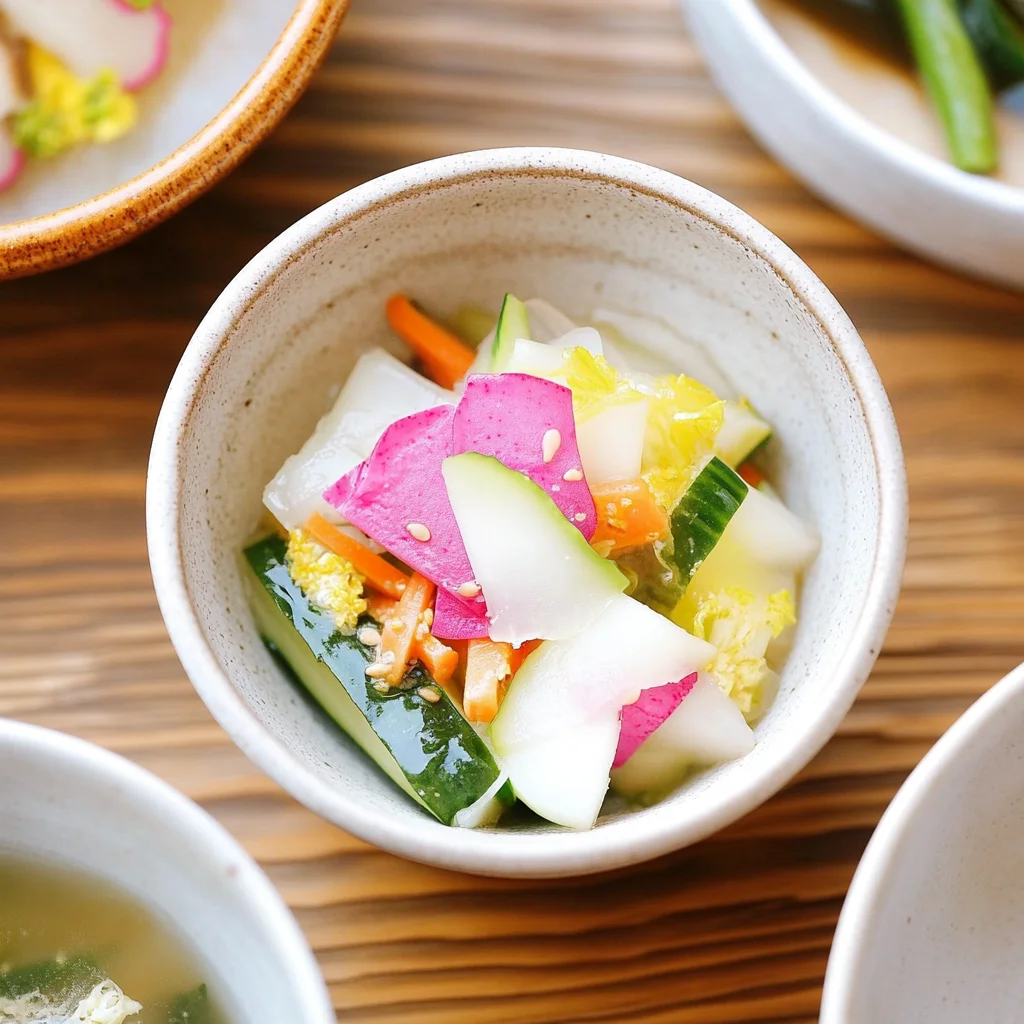
Best Side Dishes for Asazuke (Japanese Lightly Pickled Vegetables)
Asazuke pairs beautifully with various side dishes that complement its flavors. Here’s a list of delicious options that can enhance your meal experience.
- Miso Soup: A warm bowl of miso soup is comforting and pairs well with the refreshing crunch of Asazuke.
- Edamame: Steamed edamame is a simple yet nutritious side that provides protein and fiber alongside your pickles.
- Teriyaki Chicken: Sweet and savory teriyaki chicken offers a wonderful contrast to the tanginess of Asazuke.
- Sushi Rolls: Enjoy Asazuke with sushi rolls; their lightness balances out rich ingredients like avocado or tempura.
- Tofu Stir-Fry: A vegetable-packed tofu stir-fry makes for a hearty option that complements the lighter pickles perfectly.
- Rice Balls (Onigiri): These portable snacks filled with seasoned rice are great companions, especially when served with pickles on the side.
- Seaweed Salad: The umami flavor of seaweed salad enhances the overall Japanese theme while being light and refreshing.
- Grilled Fish: A piece of grilled fish adds protein while letting the vibrant flavors of Asazuke shine through in every bite.
Common Mistakes to Avoid
Making Asazuke (Japanese Lightly Pickled Vegetables) can be straightforward, but there are common pitfalls to watch out for. Here are some mistakes to avoid for the best results.
- Using the wrong vegetables: Make sure to choose fresh, crunchy vegetables that work well for pickling. Stale or overripe vegetables can ruin the texture and flavor.
- Skipping the salt: Salt is crucial for drawing moisture from the vegetables and enhancing flavor. Don’t skip this step; it helps in the pickling process.
- Not allowing enough time to pickle: If you don’t let the vegetables sit for at least one hour, they won’t absorb enough flavor. Plan ahead and allow the necessary time.
- Over-pickling: Leaving Asazuke for too long can make them overly salty and mushy. Taste your pickles after an hour to determine if you need more time.
- Ignoring optional ingredients: Ingredients like shiso leaves and yuzu zest can elevate your Asazuke. Don’t overlook these enhancements that contribute to a richer, more vibrant flavor.
Refrigerator Storage
- Store Asazuke in an airtight container in the refrigerator.
- They will stay fresh for up to 5 days.
- Make sure to press out excess air when sealing the container.
Freezing Asazuke (Japanese Lightly Pickled Vegetables)
- Freezing is not recommended because it can alter the texture of the vegetables significantly.
- If you must freeze, do so in a freezer-safe container and consume within 2 months.
Reheating Asazuke (Japanese Lightly Pickled Vegetables)
- Oven: Preheat your oven to a low temperature and warm gently until just heated through. Avoid cooking them as they are best served cold.
- Microwave: Use low power settings and heat in short bursts of 10-15 seconds, checking frequently. This method may also change their texture.
- Stovetop: Heat on low with a splash of water in a pan just until warm, stirring gently. Again, be cautious not to overheat.
Frequently Asked Questions
What are Asazuke (Japanese Lightly Pickled Vegetables)?
Asazuke refers to Japanese lightly pickled vegetables that are quick to prepare. They incorporate various fresh veggies, salt, and sometimes additional flavors like yuzu or sesame oil.
How long does it take to prepare Asazuke?
The preparation time is about 15 minutes, but you should allow at least 1 hour for them to pickle properly before serving.
Can I customize my Asazuke recipe?
Absolutely! You can swap out vegetables based on what you have at home or add different seasonings like chili flakes or garlic for extra flavor.
How do I serve Asazuke?
Asazuke makes a delightful side dish with rice or grilled meats. They also work well as part of a bento box or as a refreshing snack on their own.
Are there any health benefits to eating pickled vegetables?
Yes! Pickled vegetables can aid digestion and provide beneficial probiotics when prepared using fermentation methods. They also add variety and nutrients to your diet.
Final Thoughts
Asazuke (Japanese Lightly Pickled Vegetables) offers a colorful, crunchy addition to your meals that is both quick and easy to make. Their versatility allows you to mix and match ingredients based on your taste preferences. Whether enjoyed as a side dish or as part of a bento box, these pickles are sure to delight your palate. Give this recipe a try and feel free to customize it with your favorite veggies!
Asazuke: Everyday Japanese Pickles
- Total Time: 1 hour 15 minutes
- Yield: Approximately 4 servings 1x
Description
Asazuke, or Japanese lightly pickled vegetables, is a vibrant and refreshing culinary delight that brings color and crunch to any meal. This quick recipe allows you to prepare a diverse array of fresh vegetables, all beautifully pickled in just one hour. The balance of tangy flavor with an umami twist enhances the natural taste of the veggies, making Asazuke perfect as a side dish, topping for rice bowls, or a light snack on its own. With minimal prep time and the flexibility to customize ingredients, you’ll find yourself reaching for this recipe time and again.
Ingredients
- 4 leaves napa cabbage (11 oz, 300 g; or use green cabbage)
- 2 inches daikon radish (6 oz, 170 g; or use turnips or cauliflower)
- 1 Japanese or Persian cucumber (4.5 oz, 128 g)
- ½ watermelon radish (3.5 oz, 100 g; or use red radish)
- ⅓ carrot (1.6 oz, 45 g)
- Diamond Crystal kosher salt
- ½ tsp sugar
- 1 piece kombu (dried kelp) (1 x 2 inches or 2.5 x 5 cm per piece)
- 5 shiso leaves (perilla/ooba) (optional but recommended)
- Toasted sesame oil (for drizzling)
- Toasted white sesame seeds (for sprinkling)
- Yuzu zest (optional)
Instructions
- Gather and weigh all ingredients accurately.
- Chop vegetables into bite-sized pieces using a sharp knife.
- In a large mixing bowl, combine chopped vegetables with kosher salt and sugar until well-coated.
- Add kombu to the mixture for enhanced flavor.
- Cover with plastic wrap and let sit at room temperature for at least one hour or refrigerate overnight for deeper flavor.
- Serve chilled as a side dish or snack.
- Prep Time: 15 minutes
- Cook Time: 1 hour
- Category: Side Dish
- Method: Pickling
- Cuisine: Japanese
Nutrition
- Serving Size: 1 serving
- Calories: 25
- Sugar: 2g
- Sodium: 500mg
- Fat: 0g
- Saturated Fat: 0g
- Unsaturated Fat: 0g
- Trans Fat: 0g
- Carbohydrates: 6g
- Fiber: 1g
- Protein: 1g
- Cholesterol: 0mg
Keywords: Feel free to experiment with seasonal vegetables or add herbs for unique flavors. Adjust pickling time based on your taste preference—shorter for lighter flavor and longer for more intense tartness.